
Of the thousands of mountains in Yamagata, the prefecture literally made of mountains, one peak emphatically stands out from the rest: Haguro-san. Abode of yamabushi (mountain ascetics), and centre of spiritual journeys in Japan for over a millennium, Haguro-san (Mt. Haguro) is a small mountain that those on a spiritual journey, history buffs, hikers, nature-lovers, and plain Japanophiles alike are sure to love.
Haguro-san and The Dewa Sanzan: Mountains of Rebirth
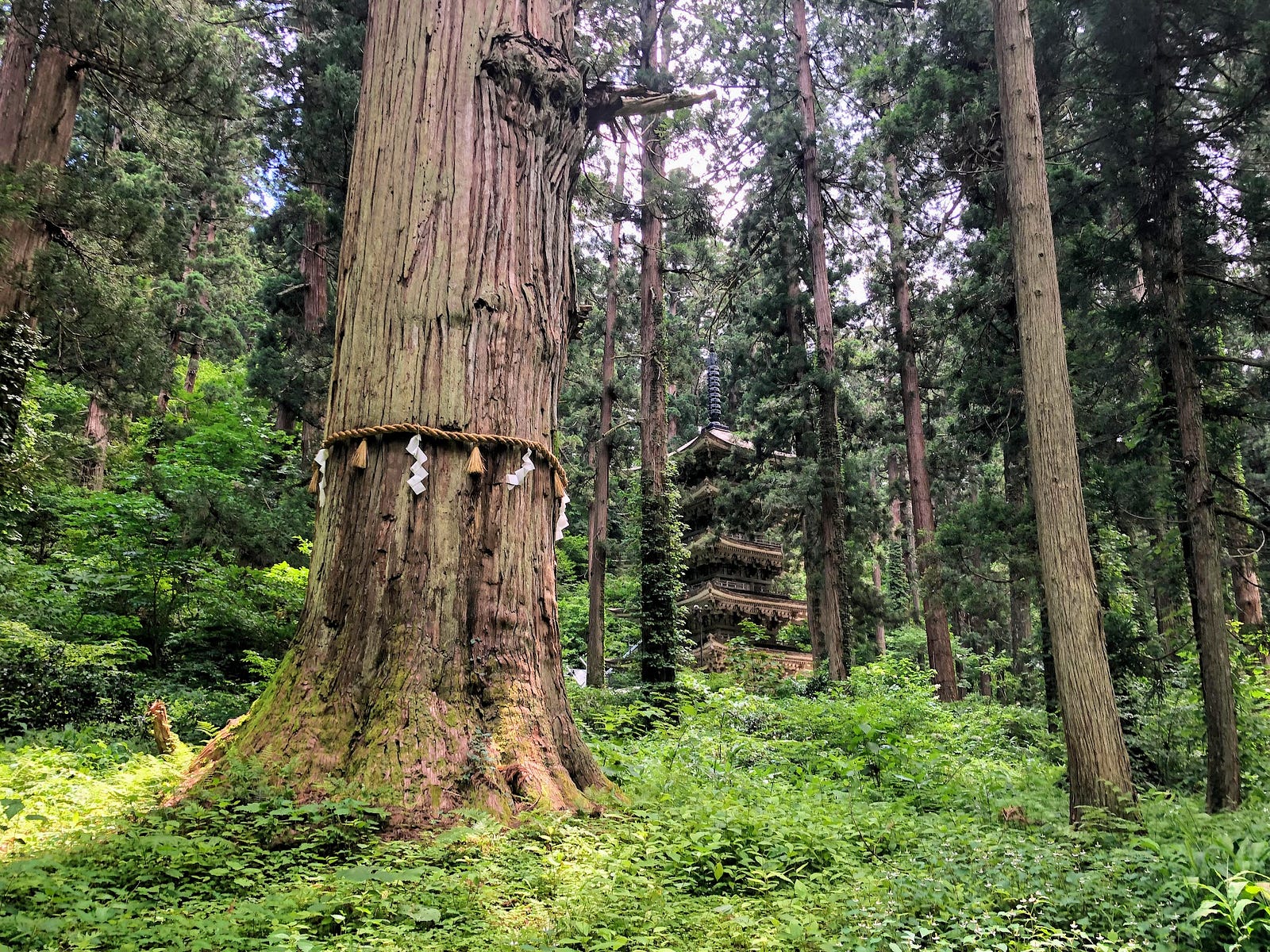
Dewa Sanzan is the collective term for the three sacred mountains in the former Dewa Province, modern-day Yamagata Prefecture: Haguro-san, Gassan, and Yudono-san. Since ancient times, anyone who traverses these three peaks is overcome with a feeling of euphoria akin to being ‘reborn’. Over the centuries, these three mountains built a reputation as ‘mountains of rebirth’, and climbing the three peaks became the ‘Journey of Rebirth’.
Representing the world of the present where we overcome our struggles in the current world, Haguro-san marks the first stop and official entrance of this journey of rebirth on the Dewa Sanzan peaks.
Yamabushi Rituals on Haguro-san
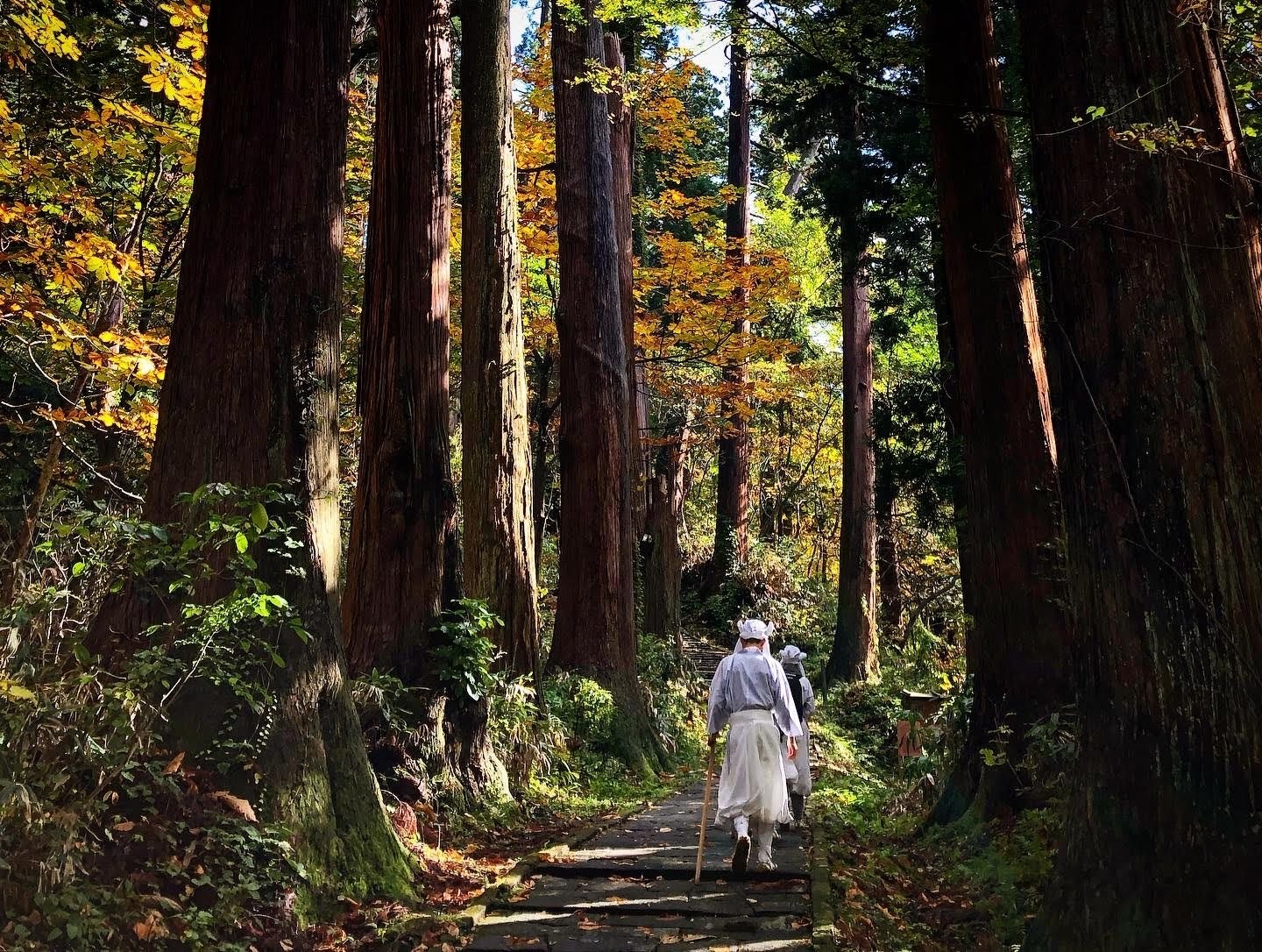
Haguro-san is known far and wide for hosting yamabushi Shugyo training, and the many yamabushi rituals taking place to this day. Perhaps most famous is the Akinomine Autumn’s Peak Ritual taking place at the end of August annually.
Every year on the penultimate night of the Akinomine, August 31st, the Hassakusai Festival at Prince Hachiko Shrine near the summit of Haguro-san takes place. In what is quite a spectacle, more than 150 yamabushi parade around an open bonfire all the while chanting in unison.
Or take, for example, the Shoreisai Festival on New Year’s Eve, the culmination of the 100-day Fuyunomine Winter’s Peak Ritual. Among many other fascinating events, part of the Shoreisai Festival is Otaimatsu-hiki. Here teams race to pull two giant burning effigies of a demon across a snowy field at the top of Haguro-san. This alone is worth waiting hours in the cold snow to watch, or if you’re lucky, even take part.
Keen? Experience the Dewa Sanzan Journey of Rebirth led by a yamabushi as has been custom for centuries. Or, if you’re really up to it, you can even try your hand at full-blown yamabushi Shugyo training.
Something (Everything) For The History Buffs
History buffs will be simply enamoured at how much Haguro-san has to offer. In fact, I couldn’t think of a better place to grasp how spirituality and religion evolved in Japan.
One important difference between the Dewa Sanzan and the popular Koya-san and the Kumano Kodo in Wakayama Prefecture is the strong Shinto influence. Whereas the remote location of Koya-san all but ruined any chance of anti-Buddhist sentiment reaching the Shingon sect stronghold, Haguro-san and the Dewa Sanzan mountains were adversely affected by Shinbutsu-bunri, the attempted split of Shintoism and Buddhism, in the late 1860s and 1870s.
Tumultuous Times in Japan’s History
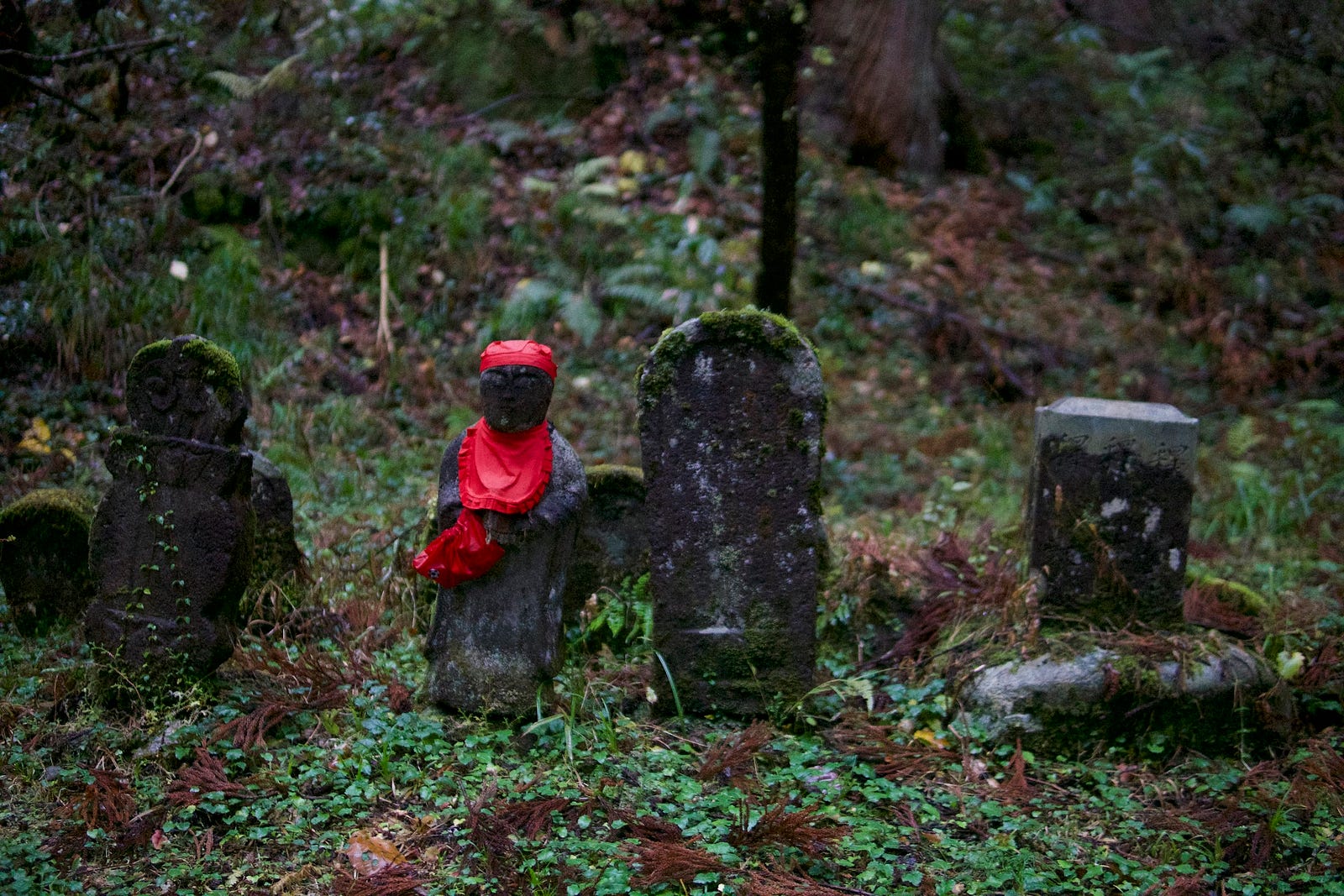
On Haguro-san, you can see the remnants firsthand. And let me tell you, it can be harrowing to witness.
The existence of a clearly Buddhist structure, the National Treasure Five Story Pagoda, on Shinto shrine grounds is reason enough. Curiously, however, right next to the pagoda there are some tiny statues of Jizo-sama, a Buddha commonly seen all over Japan. Shockingly, these statues have had their heads completely removed in what was no accident.
Plus, Haguro-san hosts two schools of yamabushi; Buddhist and Shinto. In fact, the Dewa Sanzan is the only place in the world Shinto yamabushi exist. This alone shows how the fusion, attempt at separation, and subsequent return of the fusion of Shinto and Buddhism played such an important role in how such an eclectic mix of belief systems came to coexist in Japan.
The Doorstep to Dewa
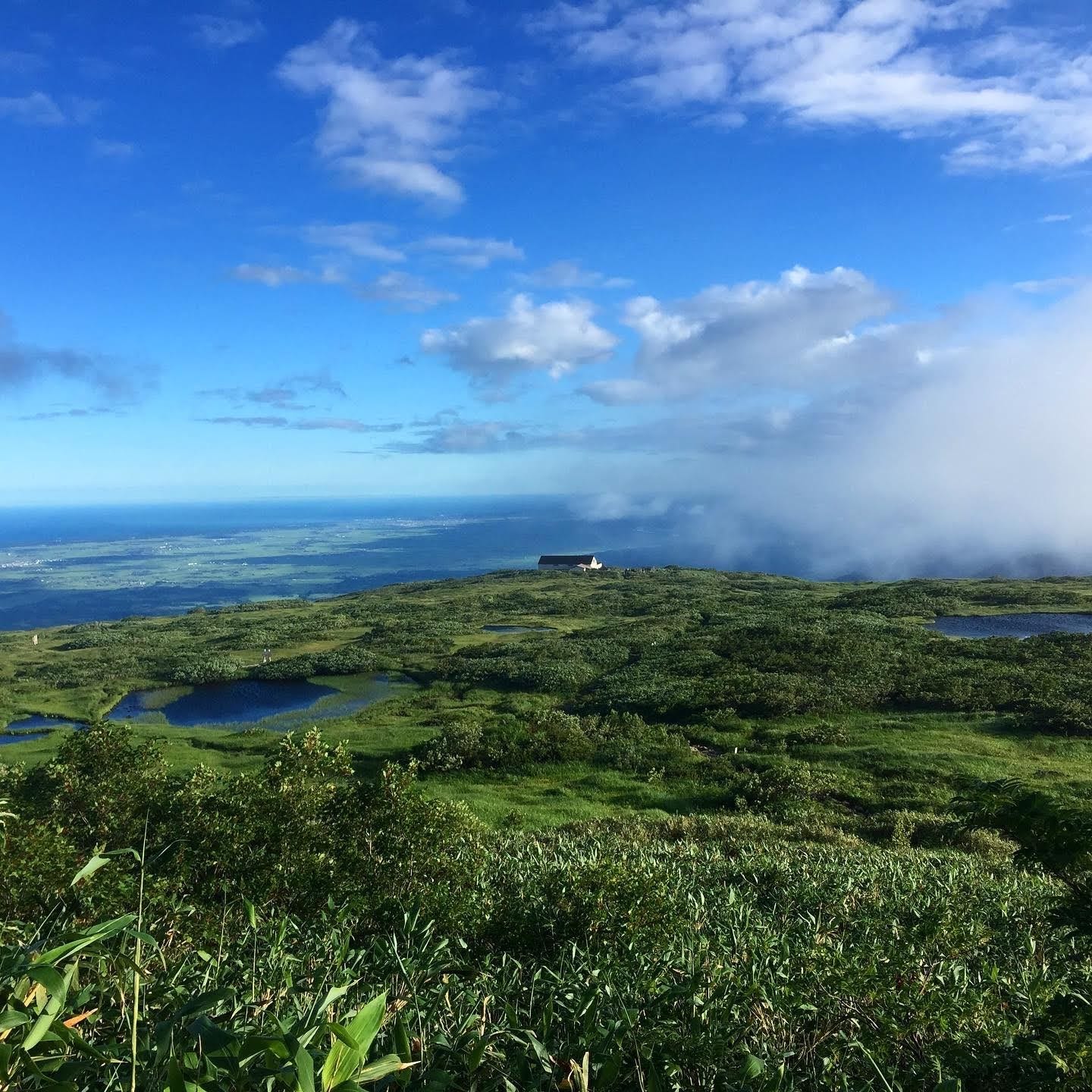
Haguro-san is quite literally the doorstep to the other Dewa Sanzan peaks, including one of the 100 Famous Mountains of Japan. Traditionally, the Haguro Trailhead was one of the official Happo Nanakuchi trailheads up Gassan.
A short hop skip and jump later and you’ll find yourself at the final Dewa Sanzan peak, Yudono-san. Home to an object of worship too sacred to mention. Yudono-san was also proving ground for Sokushinbutsu ‘Buddha Mummies’ or ‘Living Buddha’.
The Legend of Prince Hachiko
Legend has it that the Dewa Sanzan, the three sacred mountains of Dewa in modern-day Yamagata prefecture, were opened as a religious centre in 593 by Prince Hachiko, son of Emperor Sushun.
As the story goes, Emperor Sushun was assassinated by Soga-no-Umako of the Soga clan. Seeing the struggle of the everyday person, and at the shock of his father’s own death, Prince Hachiko decided to dedicate his life to providing salvation to the people through ascetic practice. Fearing for his cousin’s life, Prince Shotoku convinced Prince Hachiko to make tracks for Haguro-san as he had come across Avalokiteśvara (Kannon Bosatsu, Guanyin, or the Buddhist god of Mercy) there on his own travels.
Arriving at Yura
Prince Hachiko sailed north on the Sea of Japan and arrived at Yura on Tsuruoka’s southern coast, a spot I visited very recently before climbing Arakura-yama. Under the watchful eye of the mystical three-legged crow, a common theme in Japanese mythology, Prince Hachiko’s ascetic practice led him to Haguro-san where he came across Haguro Gongen, the deity of the mountain (Avalokiteśvara is the Honji Buddha of this Gongen). This eventually led to the founding of the Dewa Sanzan as religious grounds, which has obviously had a profound impact on the surrounding area for centuries, millennia even.
They say Prince Hachiko didn’t originally climb up the western Tsuruoka City side of Haguro-san, the side with the now famous Five Story Pagoda and stone stairway. Instead, Prince Hachiko’s journey up the legendary Dewa Sanzan allegedly began on the Shonai Town side in a hamlet conveniently known these days as Hachiko (with different Kanji 鉢子).
The Haguro Kodo is born
Now known as the Haguro Kodo (羽黒古道), the Haguro Legacy Trail, this path from Hachiko to the summit of Haguro-san is said to have prospered up until the Edo period (1603 to 1868), when literally millions of pilgrims each year ventured to the sacred Dewa Sanzan. You see, in those days travel between different regions of Japan was forbidden except for the higher classes, or those on religious pilgrimages. In other words, a religious pilgrimage was one way normal people could go and see other parts of this fair land, and many opted to visit the Dewa Sanzan.
If you’re familiar with Kabuki, you may have heard the story Kanjincho in which the famous warrior Minamoto no Yoshitsune, travelling with his porter Benkei, disguises himself as a Yamabushi to get through one of the checkpoints. This story also formed the basis for Akira Kurosawa’s The Men who Tread on the Tiger’s Tail. Minamoto no Yoshitsune is said to have stayed with Benkei in Goshonoji Shrine in Kiyokawa near the Haguro Kodo on their way to Hiraizumi in the modern-day Iwate prefecture.
Pilgrims would come off the Mogami River at the Kiyokawa checkpoint located at the base of the Tachiyazawa River, pay their respects at Goshonoji Shrine, and then climb Haguro-san using the Haguro Kodo.